.webp)
How NAROVAC Works
The science of anti-tick vaccination, the dosing schedule for cattle, and the research journey that produced Uganda's own anti-tick vaccine.
A history of vaccination against ticks and tick-borne diseases
The first anti-tick vaccines were tested in 1939. Two later products, Gavac® and TickGuard®, were registered in Cuba and Australia respectively.
The Gavac™ formulation (Heber Biotec S.A., Havana, Cuba) is registered and commercially available in Cuba, Colombia, the Dominican Republic, Brazil and Mexico, where it is used alongside conventional tick control.
That body of work established that an animal's own immune response can be used against ticks. It also shaped the thinking behind Uganda's own programme, which is described on this page.
The history of tick control
Tick and tick-borne disease (TTBD) control in cattle has been attempted through six broad approaches, each with its own limits.
-
Approach 1
Acaricide applications by spray, dipping or pour-on.
-
Approach 2
Fencing, stall feeding and the creation of bare ground to block tick movement.
-
Approach 3
Breeding for resistance and tolerance to TTBDs, including Bos indicus cattle such as Boran, short-horn Zebu and N'Dama.
-
Approach 4
Vaccines against ticks and the diseases they transmit.
-
Approach 5
Bush burning to destroy the free-living stages of ticks.
-
Approach 6
Handpicking of ticks from infested animals.
The limits of acaricides and imported vaccines
The current ineffectiveness and misuse of acaricides in Uganda warrants a novel product that has minimal effects on animals, humans and the environment.
The anti-tick vaccines on the market were based on BM86/95, antigens extracted from tick species that are not the problem in Uganda.
Uganda needed an anti-tick vaccine based on the ticks that actually prevail here and transmit the pathogens that kill livestock, including East Coast fever, anaplasmosis and babesiosis. NARO developed such a vaccine, and it is NAROVAC.
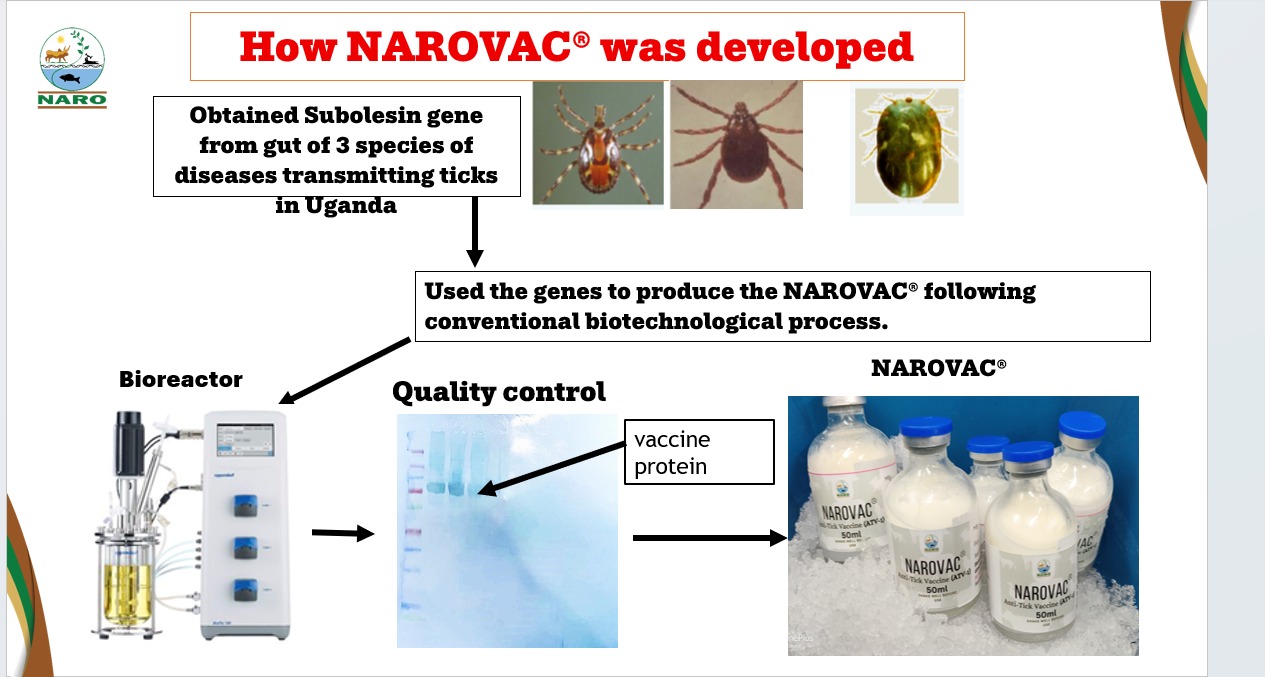
How NAROVAC was developed
The vaccine is based on subolesin, a conserved tick antigen. Using a conserved antigen means the vaccine acts against several of the tick species found in Uganda rather than a single one, which matches the mixed tick challenge that Ugandan herds actually face.
Candidate formulations were screened in the laboratory, then taken through proof-of-concept immunisation and infestation studies, on-station clinical trials, and finally field evaluation in cattle herds. Each stage was reviewed by Uganda's research regulators before the next one began.
What happens after the vaccine is given
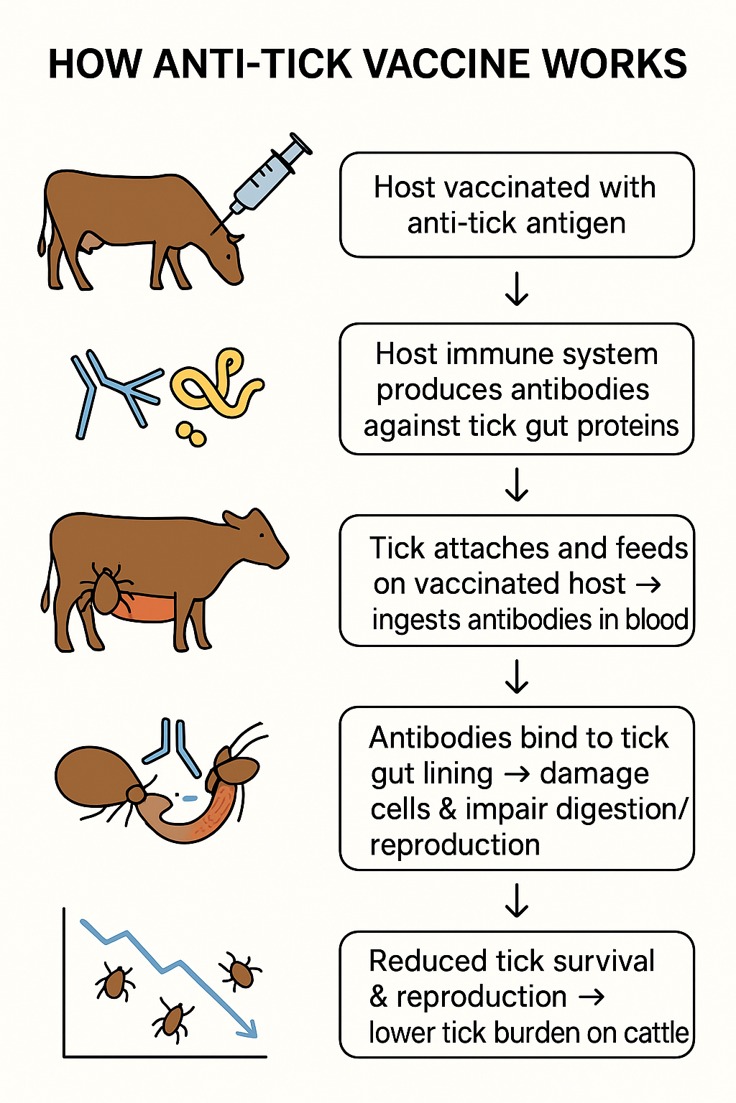
NAROVAC does not act on the tick directly. It recruits the vaccinated animal's immune system, so the animal itself becomes part of tick control.
-
Step 1
Vaccination
Selected tick proteins are introduced to the animal's immune system.
-
Step 2
Immune response
The animal produces antibodies that circulate in its blood.
-
Step 3
Tick feeding
A tick that feeds on the vaccinated animal takes in those antibodies.
-
Step 4
Disruption
The antibodies interfere with tick feeding, development and reproduction.
-
Step 5
Reduced tick pressure
Lower tick survival and reproduction lead to a gradual fall in tick burden.
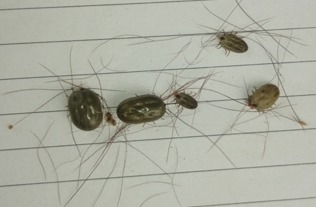
Tick comparison
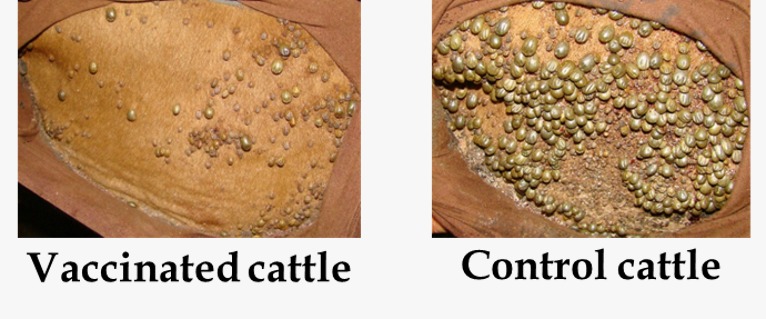
Vaccination schedule
The schedule below is the vaccination regime used in the trials. Always confirm the regime for your herd with your veterinary professional.
| Timing | Action |
|---|---|
| Day 0 | Administer 1 ml of vaccine by the intramuscular (IM) route. Monitor tick burden and calf health afterwards. |
| Day 30 | Administer the booster dose. If tick burden is high, continue monitoring closely. |
| Day 180 | Administer the second booster, six months after the first dose, to sustain the response. |
Animals may still pick up ticks after vaccination. Monitor for tick-borne diseases and manage them accordingly until tick populations fall. Spray only if tick burden is high.
Anti-tick vaccination within integrated tick control
The vaccine performs best when it is used as one part of a wider tick management plan rather than on its own.
Grazing systems
Closed herds, or herds that do not mix with others, register a faster reduction in tick infestation than open grazing. This was observed on the prison farms in Uganda.
Adherence to the regime
The vaccination regime must be followed. The initial dose, the day 30 booster and the day 180 booster together produce the response the vaccine is designed for.
Environment and weather
Tick infestation rises in the rainy season and falls in the dry season, so management has to be adjusted accordingly. This will be examined in more detail during the forthcoming pharmacovigilance studies.
The NARO anti-tick vaccine journey
The programme has moved through distinct stages, each building the evidence and the regulatory position needed for the next.
-
Proof of concept
Immunisation of cattle followed by infestation with tick larvae.
-
2018–20
Product formulation batches and on-station clinical trials, in both injectable and oral forms.
-
2020–22
Bioinformatics, genomics, immunogenetics and antibody screening.
-
2021–23
UNCST and NBC guided the project into a regulatory realignment, with audits and training.
-
Regulatory stage
Product formulation prepared for confined field trials.
-
Permits
Permits secured for confined field trials with partners.
-
Facility
Construction and equipping of the vaccine research and production facility.
2024–26: from field evidence to local manufacturing
The most recent phase moved the vaccine from extended field evaluation, through regulatory review, to national endorsement and local production capacity.
-
Extended field trials
Evaluation was extended across additional agro-ecological zones, cattle breeds and tick burdens, with farmers volunteering their herds.
-
NDA suitability of premises
The National Drug Authority certified that the manufacturing premises meet the standards required for veterinary vaccine production.
-
NDA licence to manufacture
A licence to manufacture drugs was secured, authorising production of the vaccine at the NVPC facility.
-
Presidential launch of the vaccine
His Excellency the President of Uganda officially launched the NAROVAC Anti-Tick Vaccine and endorsed the national roll-out plan.
-
Commissioning of the manufacturing facility
The anti-tick vaccine manufacturing facility was commissioned, establishing local capacity to produce the vaccine in Uganda.
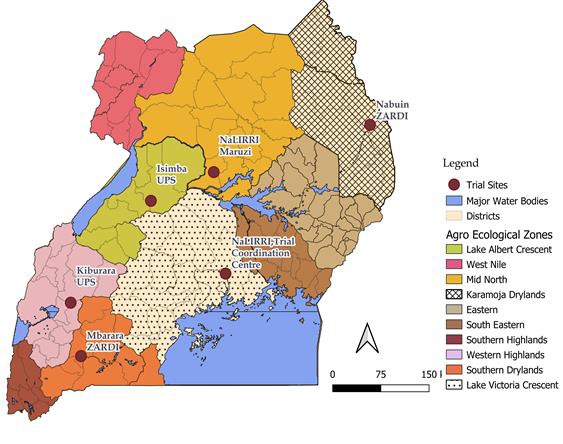
Location of experimental cattle sites
Trial sites are spread across Uganda's agro-ecological zones (AEZs) so that the vaccine is evaluated under genuinely different field conditions. Six criteria guide the selection of each site.
-
1.
Agro-ecological zones: At least two sites, as required by the NDA ecto-parasitocide regulation.
-
2.
Cattle breeds: EASZ, Boran and Ankole breeds, matched to the conditions of each site.
-
3.
Tick species: Abundance, burden, challenges and distribution recorded at each site.
-
4.
Availability of cattle: Cattle available for 365 days to support continuous evaluation.
-
5.
Institutional farms: Reduced-cost platforms for disseminating research findings.
-
6.
Trial design: International vaccine trial designs followed for robust evidence.
Regulation of our research
Development and testing of NAROVAC are conducted within Uganda's regulatory framework for veterinary products and research involving animals. The following bodies provide oversight.
- NARO Institutional Science Committee (SC)
- NARO Institutional Animal Care and Use Committee (IACUC)
- NARO Institutional Biosafety Committee (IBC)
- Uganda National Council for Science and Technology (UNCST)
- National Drug Authority (NDA)
Ready to learn more?
Contact the NAROVAC team for farmer support, veterinary information, research enquiries, partnerships or media requests.